




When Should a Small Business Hire Another Employee? Diagnose These Five Problems First

Quick Answer
A small business should hire another employee when it has sustained, profitable demand that its current team cannot fulfill—even after responsibilities, workflows, and decision authority have been clarified.
If the workload is being created by rework, missed handoffs, owner bottlenecks, or inconsistent lead follow-up, fix the system before adding payroll. Otherwise, a new employee may make the existing chaos more expensive.
Is Your Business Understaffed—or Losing Capacity?
Late summer often brings hiring decisions back into focus.
Employees return from vacation. Customers become more active. Year-end priorities move closer. Owners begin asking whether the current team can handle the company’s fall workload and growth goals.
When everyone already feels stretched, the conclusion seems obvious:
“We need another person.”
Sometimes that is exactly right. A capable employee in a clearly defined role can increase capacity, improve service, and help the company pursue profitable opportunities.
But feeling busy does not always mean a business is understaffed.
Before posting a job opening, determine what is consuming the capacity you already have.
Ask:
What work is creating the overload?
Why does that work require so much time?
Who currently owns the result?
Where does the process slow down?
How much work is being repeated or corrected?
Which decisions require the owner’s approval?
Are leads and customers being lost between departments?
Would another employee solve the problem—or simply inherit it?
The answer reveals whether your business has a capacity problem or a chaos problem.
A Capacity Problem and a Chaos Problem Are Not the Same
A capacity problem exists when the business has more necessary, profitable work than a capable team can reasonably complete.
A chaos problem exists when the team’s time is being consumed by avoidable friction.
That friction may include:
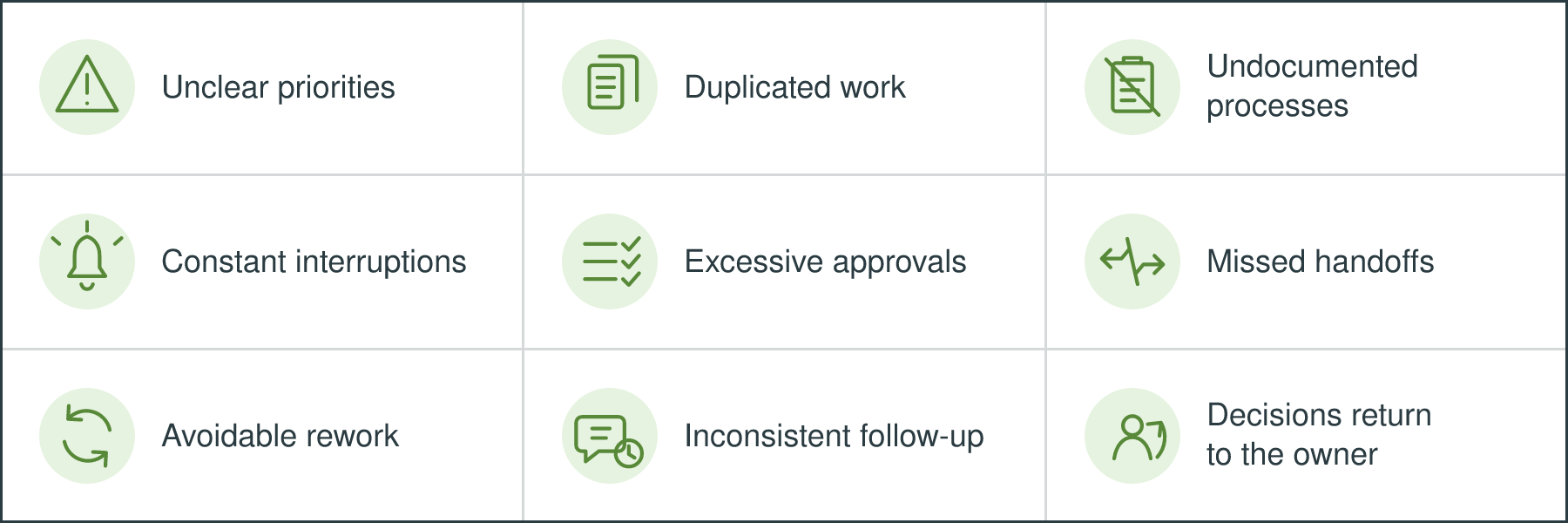
Both problems make a team feel overwhelmed. Only one is automatically solved by hiring.
When owners mistake chaos for capacity, they add payroll without fixing the conditions that created the overload. The new employee enters the same environment, asks the same unanswered questions, and depends on the same overloaded people for direction.
Now the business has more employees—but not necessarily more productive capacity.
When a Founder-Dependent Pipeline Looks Like a Hiring Problem
This distinction is especially important in founder-led businesses.
Owners frequently assume they need another salesperson, account manager, or administrative employee because leads are not receiving timely follow-up, proposals are delayed, or customer requests are falling through the cracks.
But more headcount will not fix a sales pipeline that still depends on the CEO.
Consider these questions:
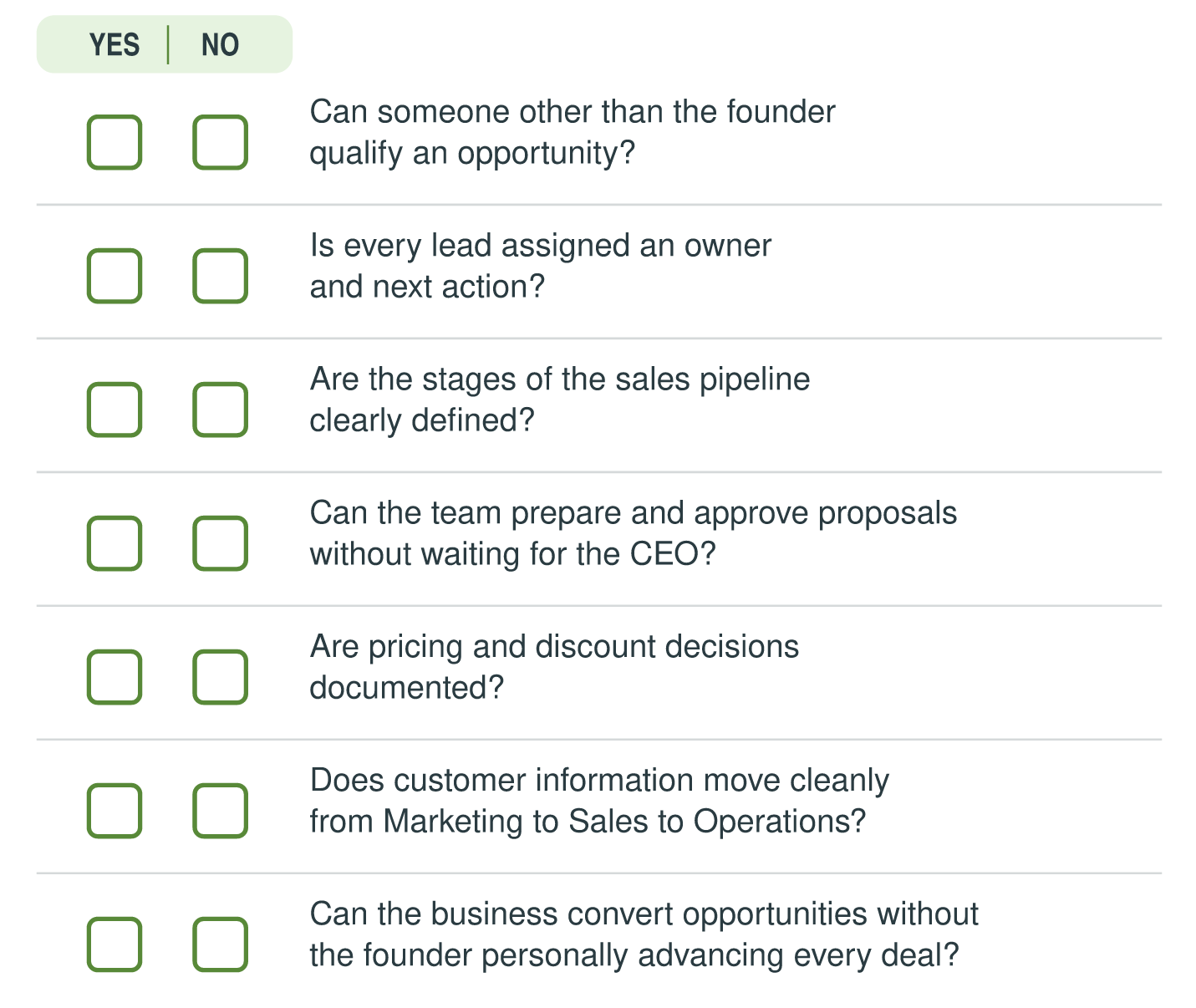
If the answer to several of these questions is no, the immediate need may not be another person. The business may first need a repeatable revenue system.
Hiring a salesperson before building that system often creates a frustrating cycle. The new employee generates questions, waits for approvals, and relies on the founder’s relationships and knowledge to move opportunities forward.
The founder remains the bottleneck, and the new hire never receives the structure required to succeed.
That does not mean the business should never hire. It means the system should be prepared to support the person.
Five Problems to Diagnose Before Hiring Another Employee
1. No One Clearly Owns the Result
If multiple people believe they are responsible—or everyone assumes someone else is responsible—work will be delayed, duplicated, or missed.
Hiring another employee adds one more person to an unclear accountability structure.
Before expanding the team, define:
☐ Who owns the result
☐ Who performs the work
☐ Who provides input
☐ Who has decision authority
☐ How success will be measured
A job description should not simply list activities. It should establish the business result the employee is expected to produce.
2. The Process Exists Only in Someone’s Head
When important work depends on one person’s memory or preferred method, the business cannot execute it consistently.
A new hire will require extensive explanation, observation, and correction. Without documentation, that employee may eventually create a different process—adding even more inconsistency.
If the work is important enough to justify another salary, it is important enough to document.
You do not need a perfect manual before hiring. You need a clear starting process that explains how the work moves, where information lives, who makes decisions, and what a successful outcome looks like.
3. Every Important Decision Returns to the Owner
If employees cannot move forward without the owner’s approval, headcount may not be the primary constraint.
Decision-making is.
Adding another employee can produce more questions, meetings, and approvals for the founder. Instead of creating leverage, the hire makes the owner an even larger bottleneck.
The goal is not simply to move tasks off the owner’s desk. It is to give the right people the information, authority, and accountability to complete those tasks successfully.
A business that cannot operate without constant owner intervention will also be harder to scale, transfer, or eventually sell.
Learn why reducing owner dependency matters to enterprise value.
4. The Team Is Correcting Preventable Mistakes
Rework can make a fully staffed team appear understaffed.
Incorrect information, inconsistent instructions, missing details, and poor handoffs create work that should not exist. If the business does not address the source of those errors, a new employee may help process the rework without reducing it.
Before hiring, determine how much capacity is spent:
Correcting mistakes
Re-entering information
Searching for documents
Clarifying responsibilities
Waiting for decisions
Following up on incomplete work
Starting tasks over
Eliminating even one recurring source of rework may restore more capacity than adding another person.
5. Leads or Customers Are Being Lost Between Departments
A business may assume it needs another salesperson when the real problem is inconsistent lead follow-up. It may hire another customer service employee when the actual issue is a poor transition from sales to delivery.
Marketing, Sales, Operations, Finance, and People do not operate independently.
If lead information is incomplete, ownership is unclear, or customer expectations are not communicated during the handoff, another employee in one department will not repair the entire process.
More people cannot compensate for a disconnected business system.
If several of these problems sound familiar, quantify the issue before opening another position. MVB’s free O2M™ Chaos Cost Calculatorhelps reveal where wasted CEO time, missed leads, team friction, and operational gaps may already be costing the business.
Should You Hire—or Fix the System First?
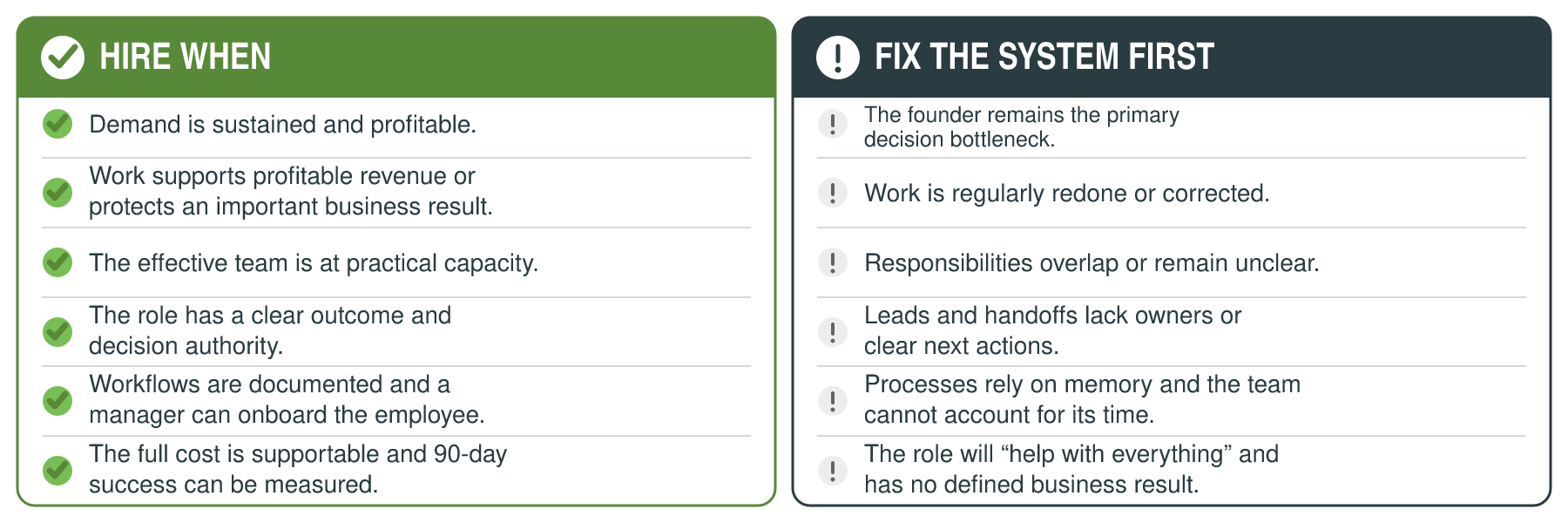
This framework does not replace thoughtful workforce planning. It helps ensure that hiring is the solution to a verified capacity need—not a reaction to a problem the business has not diagnosed.
Calculate the Full Investment Before You Hire
The cost of hiring extends beyond salary.
A business must also consider recruiting, onboarding, payroll obligations, benefits, technology, training, management time, and the time other employees will spend helping the new person become productive.
Those investments can create significant value when the role addresses a real business need.
But when the hire is intended to absorb chaos, the business takes on a recurring commitment without eliminating the underlying cost.
The result may include:
Higher payroll without a proportional increase in output
More management demands on the founder
Longer communication and approval chains
Slower decision-making
Increased employee frustration
Inconsistent customer experiences
Lower profitability
A sales pipeline that still depends on the CEO
The organization becomes larger, but not necessarily stronger, more scalable, or more valuable.
Build Capacity, Not a More Expensive Version of the Same Problem
Within MVB’s O2M™ framework, the People Engine does not operate alone.
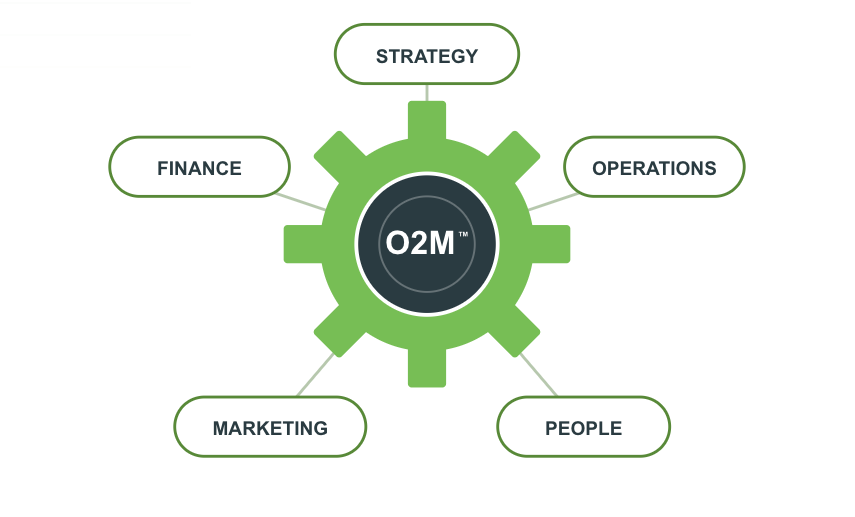
It depends on:
Strategy: clear direction, priorities, and ownership
Finance: visibility into what the business can afford and what the role must produce
Operations: documented systems, processes, and handoffs
Marketing: a consistent source of qualified opportunities
People: the right individuals in the right roles with appropriate accountability
When one engine stalls, the People Engine often absorbs the consequences.
Employees work harder. Owners step back into daily tasks. Leads receive inconsistent attention. Customers experience missed handoffs. Hiring begins to feel like the only available solution.
A pattern we frequently encounter in founder-led companies is that hiring pressure appears first as a People problem. Once the work is traced from beginning to end, however, the underlying constraint is often found in Strategy, Operations, or Lead Engagement.
The best hiring decisions begin with an honest diagnosis of where the business is losing capacity.
Frequently Asked Questions
How do I know when my small business needs another employee?
A small business may need another employee when it has sustained, profitable demand that its current team cannot fulfill after workflows, responsibilities, and decision authority have been clarified. Turning away suitable business, consistently missing service standards, or requiring skilled employees to spend substantial time on lower-value work can also indicate a genuine capacity need.
Should I improve my business processes before hiring?
Yes. Documenting essential workflows before hiring makes onboarding more consistent and helps determine whether the position is truly necessary. The process does not need to be perfect, but the employee should know what result they own, how the work moves, where information lives, and who has decision authority.
Can hiring more employees reduce profitability?
Yes. A new employee creates recurring financial and management obligations. If the role does not increase productive capacity, protect revenue, improve service, or reduce a verified cost, it may increase overhead without producing a corresponding return.
Should I hire a salesperson if the founder still closes every deal?
Not immediately. First define qualification criteria, pipeline stages, follow-up expectations, proposal responsibilities, pricing authority, and customer handoffs. Without that structure, the salesperson may remain dependent on the founder and struggle to convert opportunities independently.
What should I calculate before hiring another employee?
Estimate the complete investment in the role, the value of the capacity it should create, the cost of the current problem, and the financial result the employee must produce. Also determine whether the problem could be solved more effectively through process improvement, delegation, automation, or outside expertise.
Before You Add Payroll, Calculate the Cost of the Problem
Your business may genuinely need another employee.
But first, determine whether you are short on people—or losing capacity through wasted CEO time, missed leads, unclear responsibilities, unnecessary approvals, and broken handoffs.
The free O2M™ Chaos Cost Calculator helps you uncover:
The hidden cost of wasted CEO time
Revenue being lost through missed leads
Areas where the business is leaking profit and momentum
Your current Chaos Score
The business engine that needs attention first
Before you hire another person to manage the workload, calculate how much of that workload should not exist in the first place.